
 Image 1 of 10
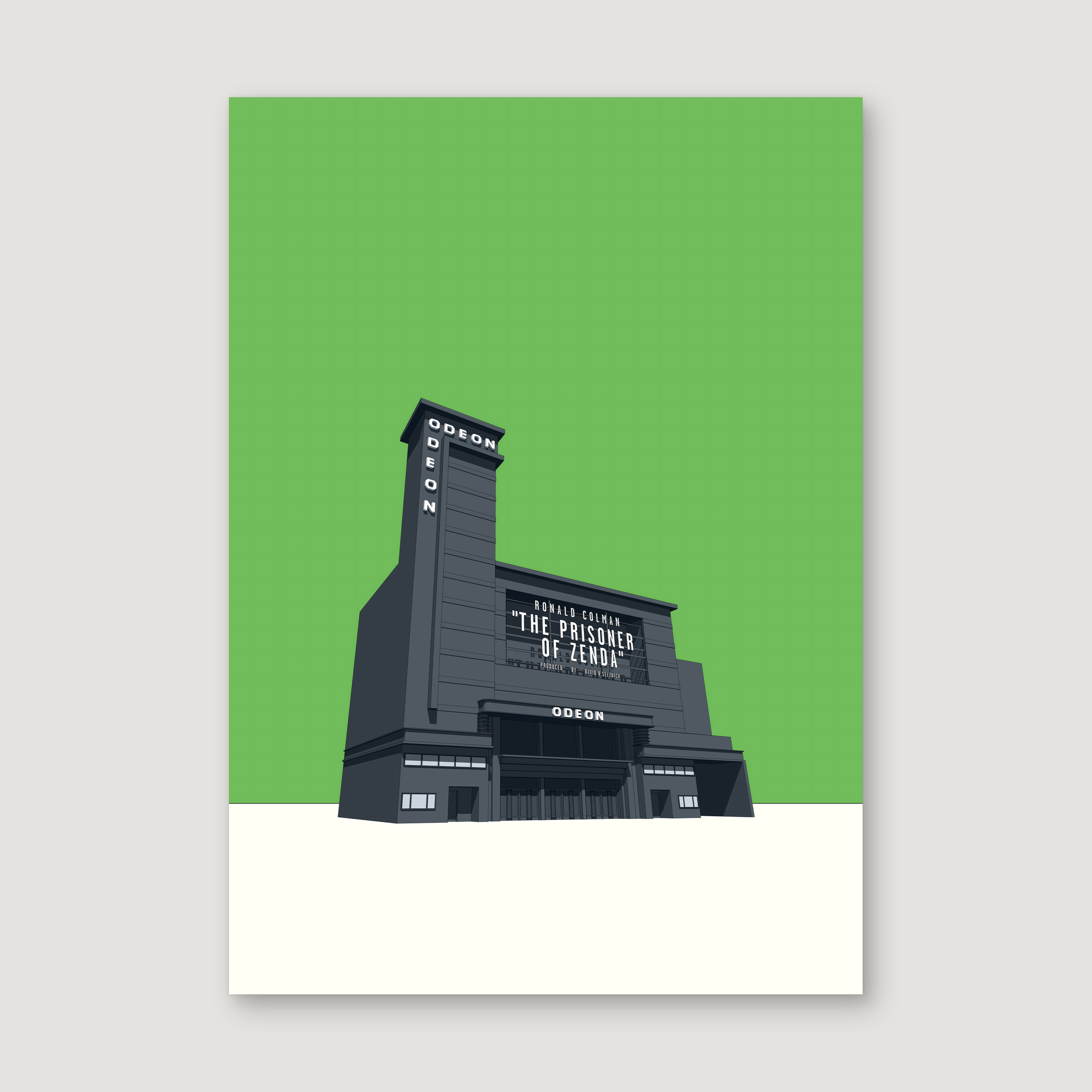 Image 2 of 10
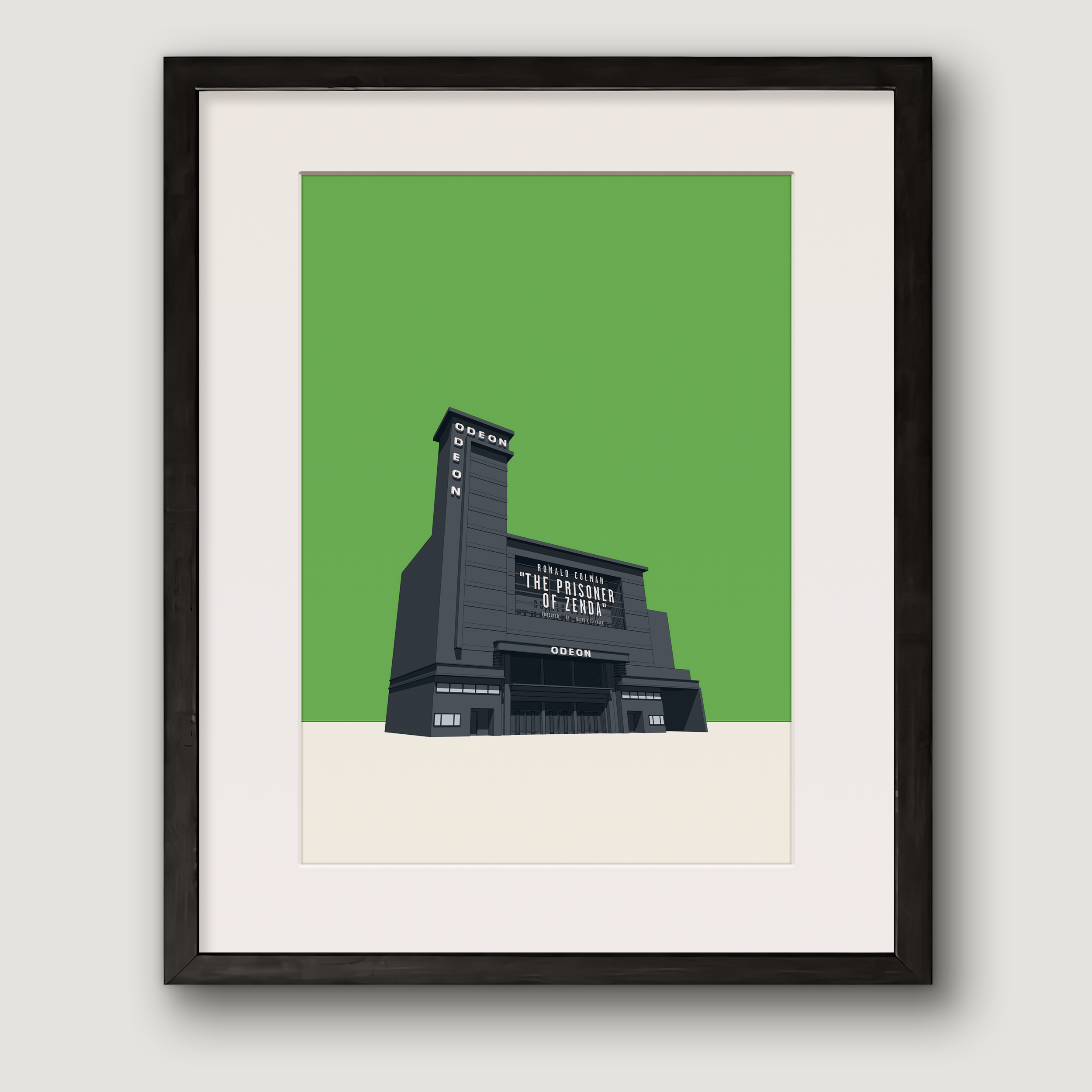 Image 3 of 10
 Image 4 of 10
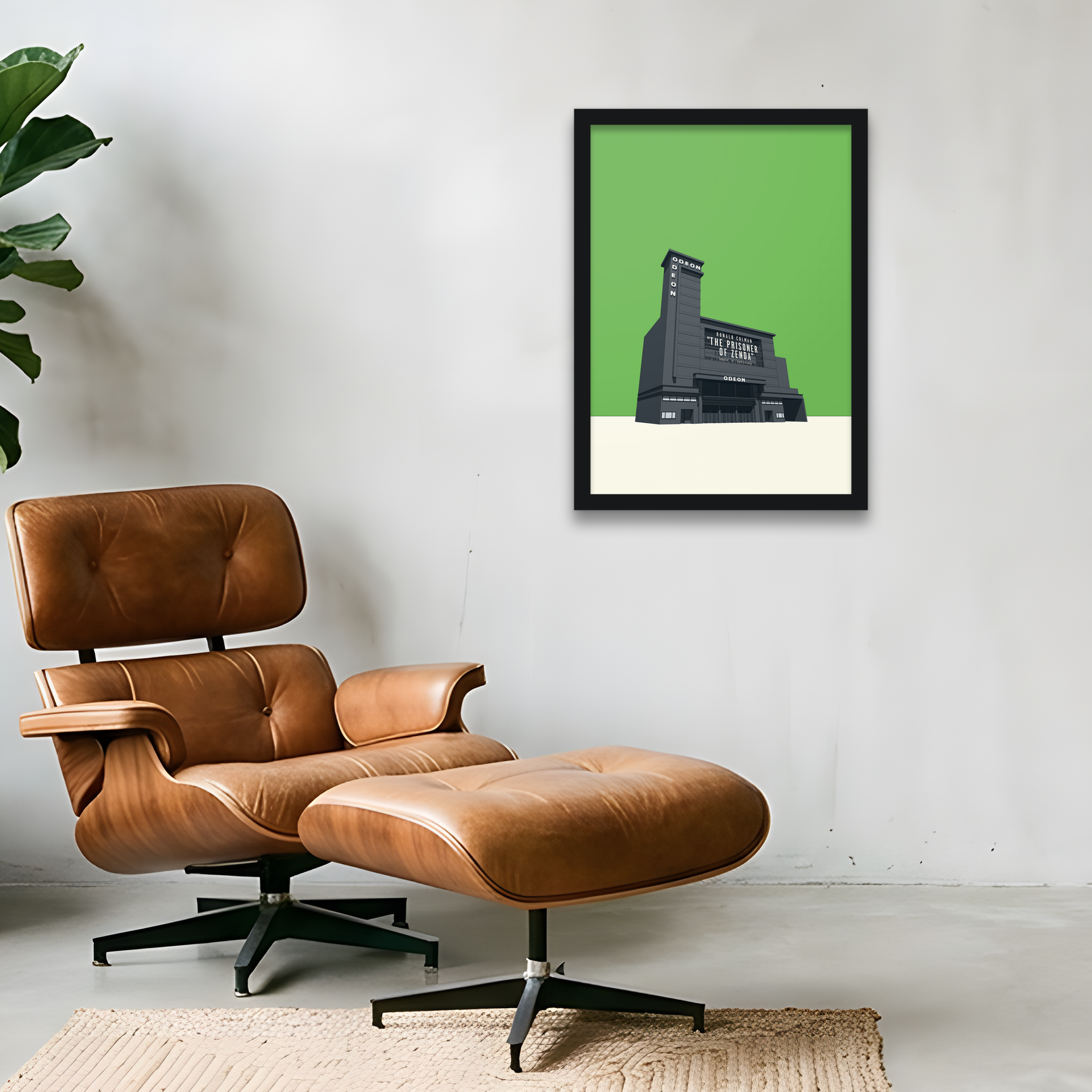 Image 5 of 10
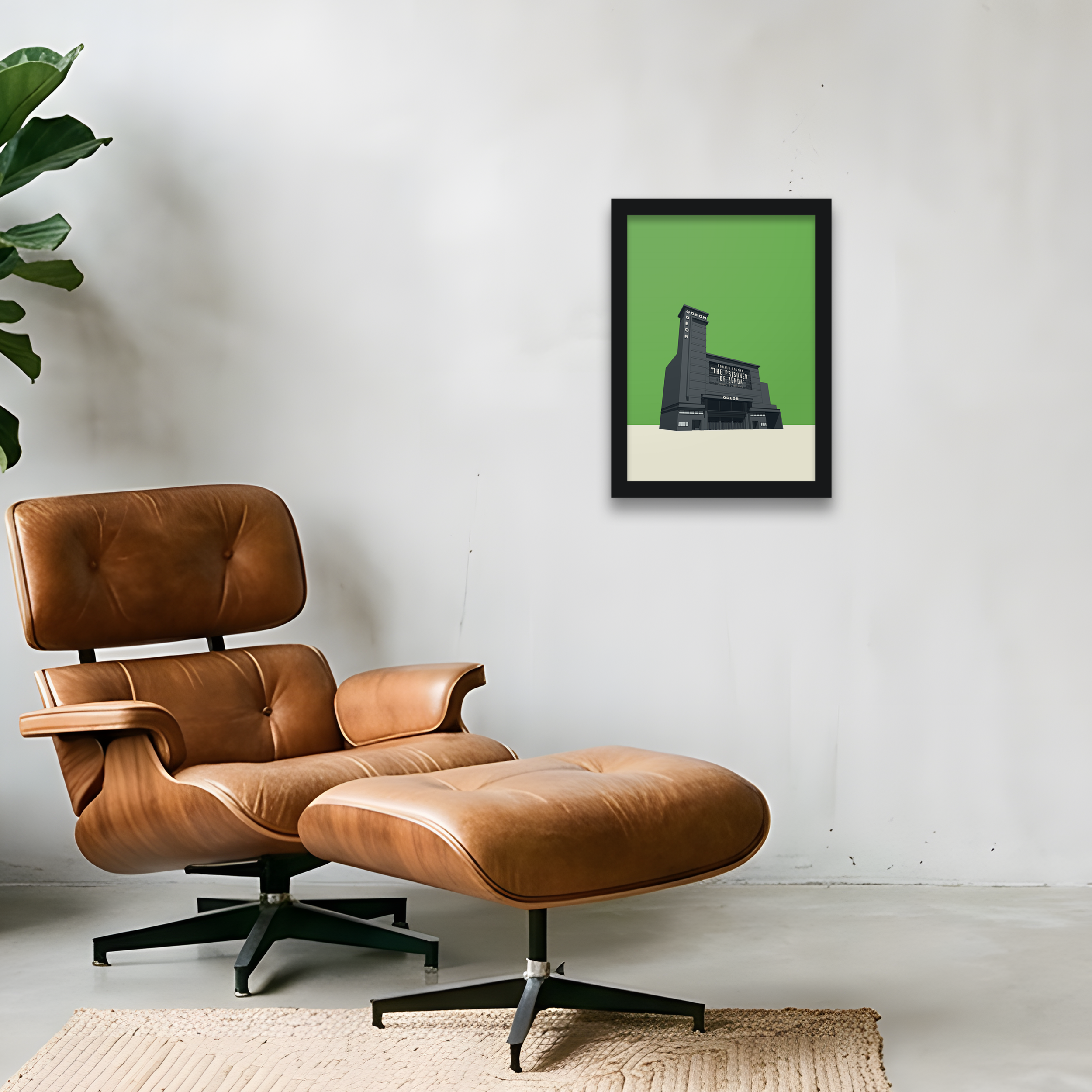 Image 6 of 10
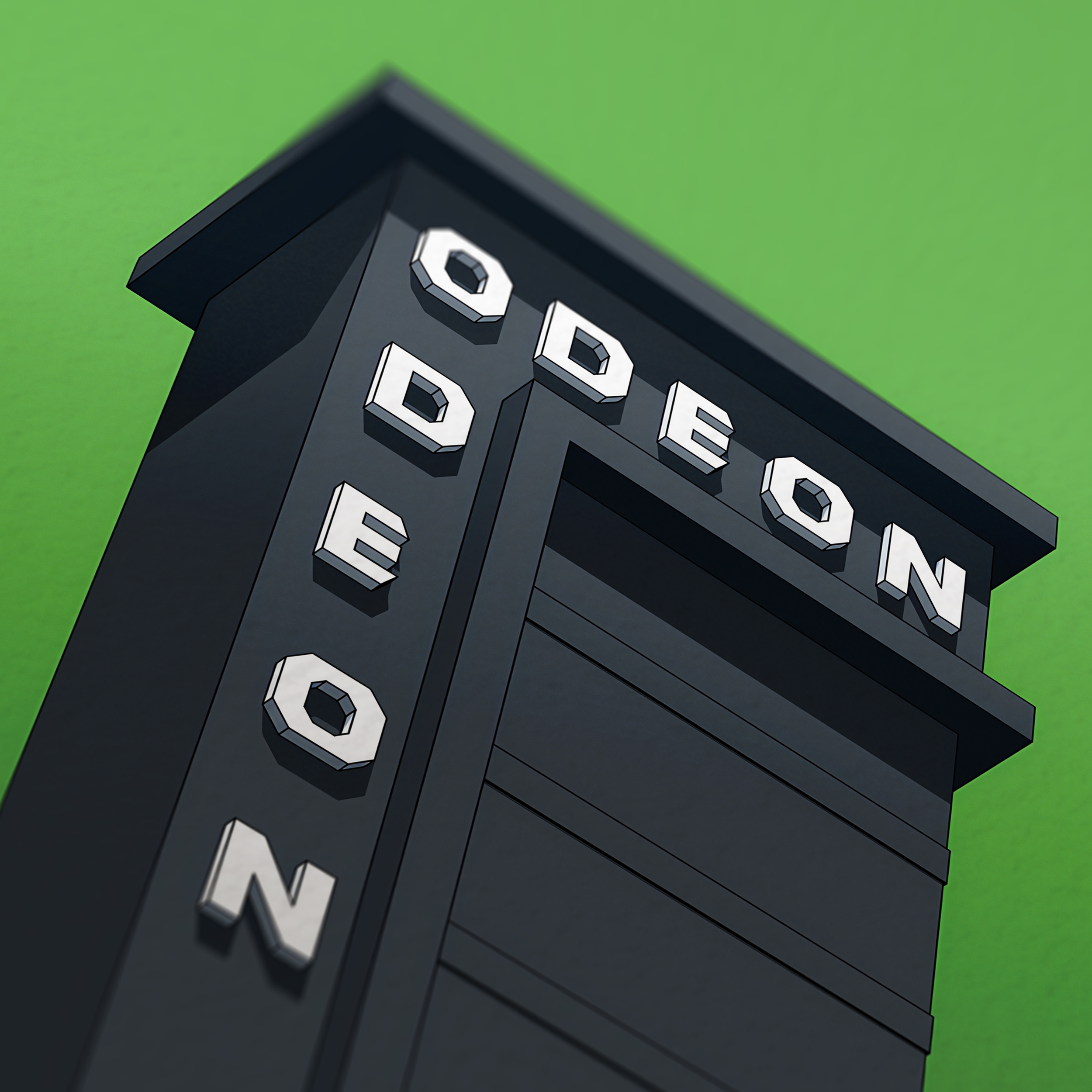 Image 7 of 10
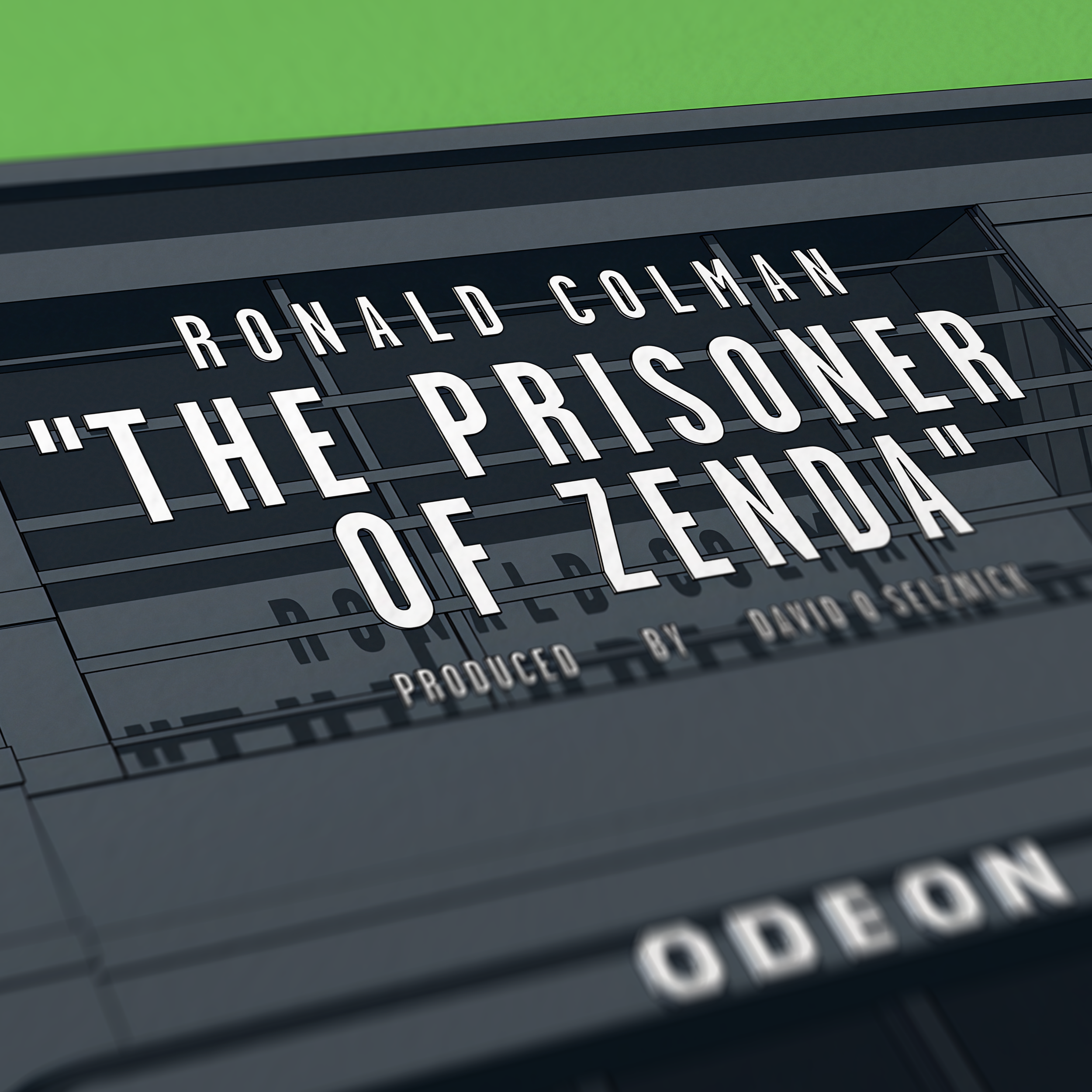 Image 8 of 10
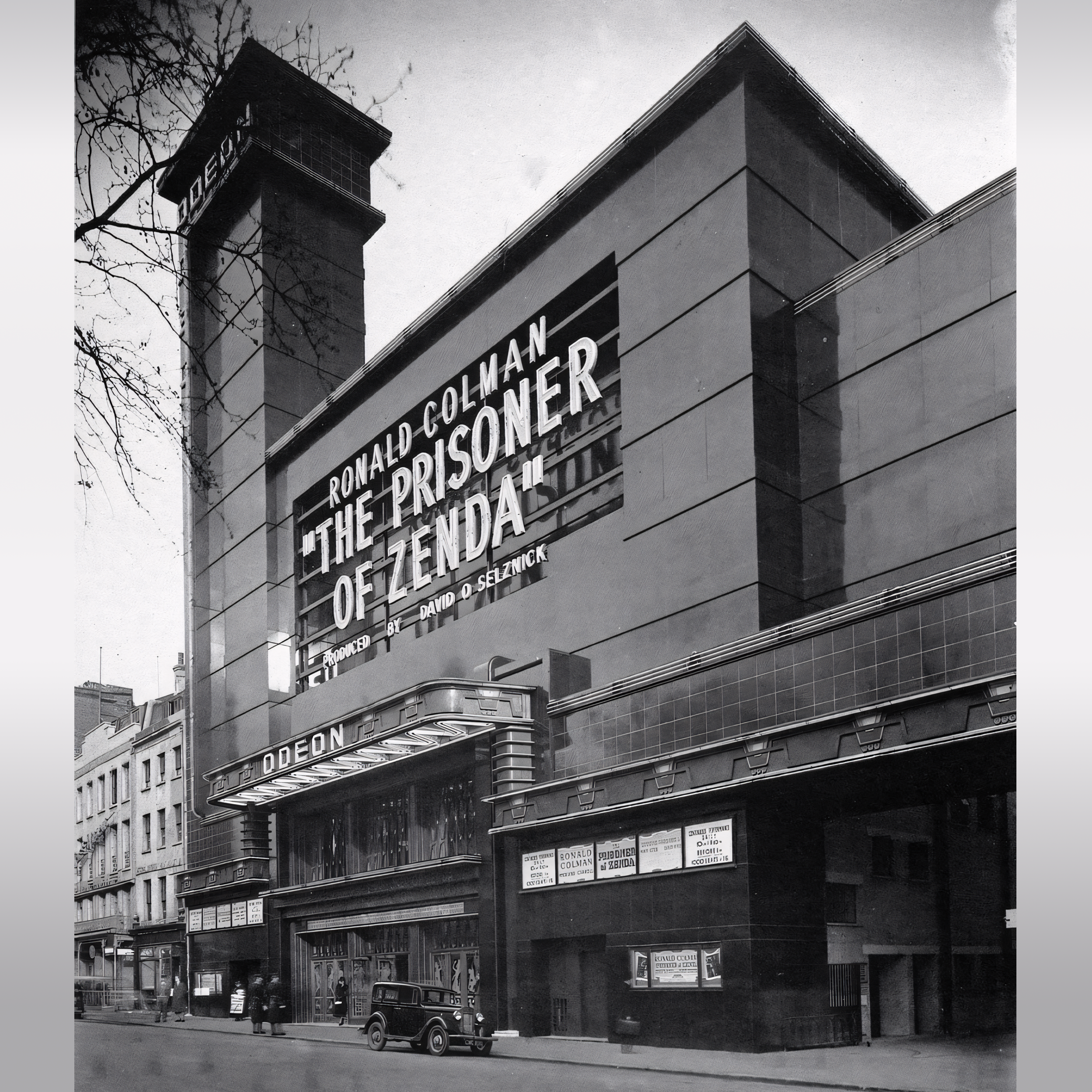 Image 9 of 10
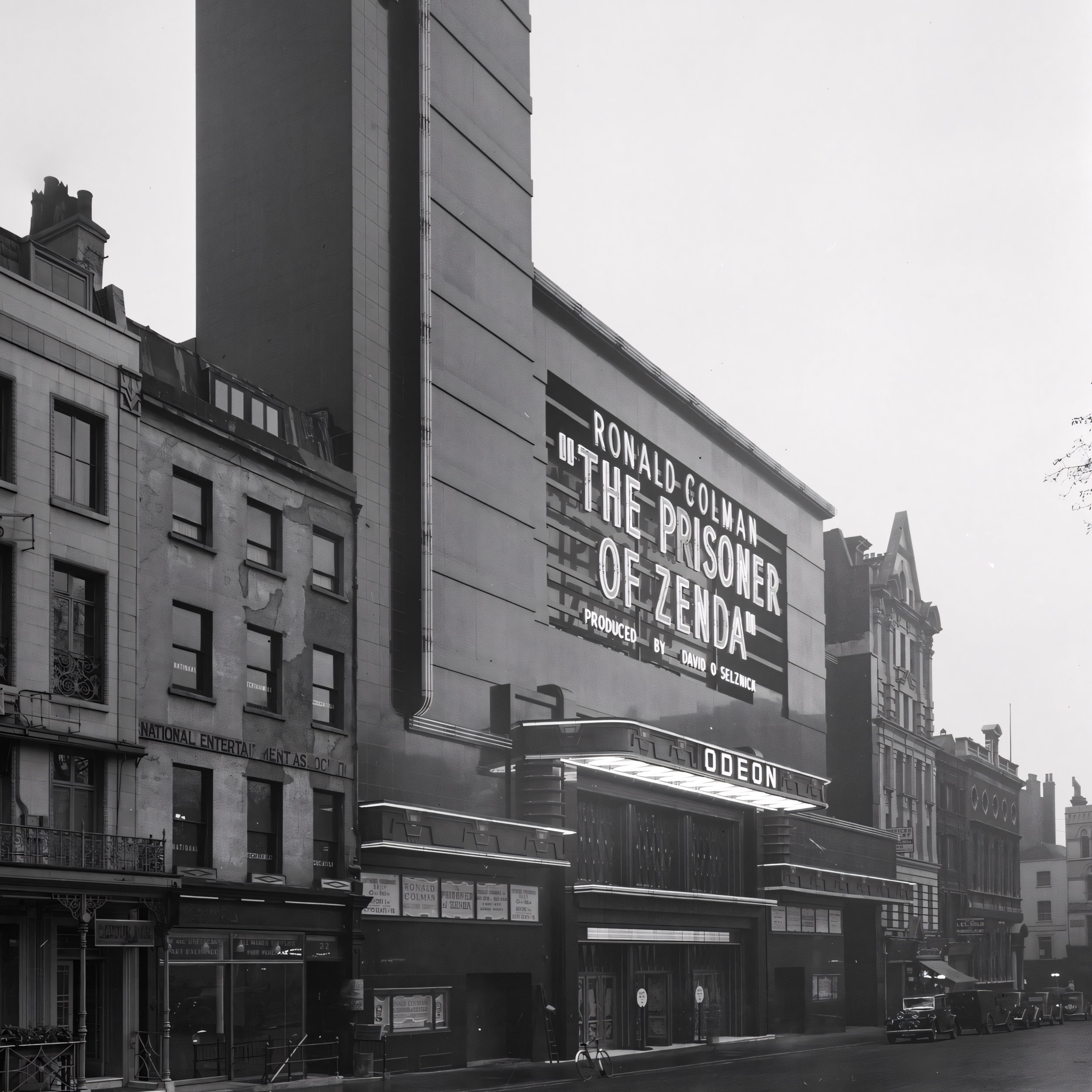 Image 10 of 10
About ODEON Leicester Square
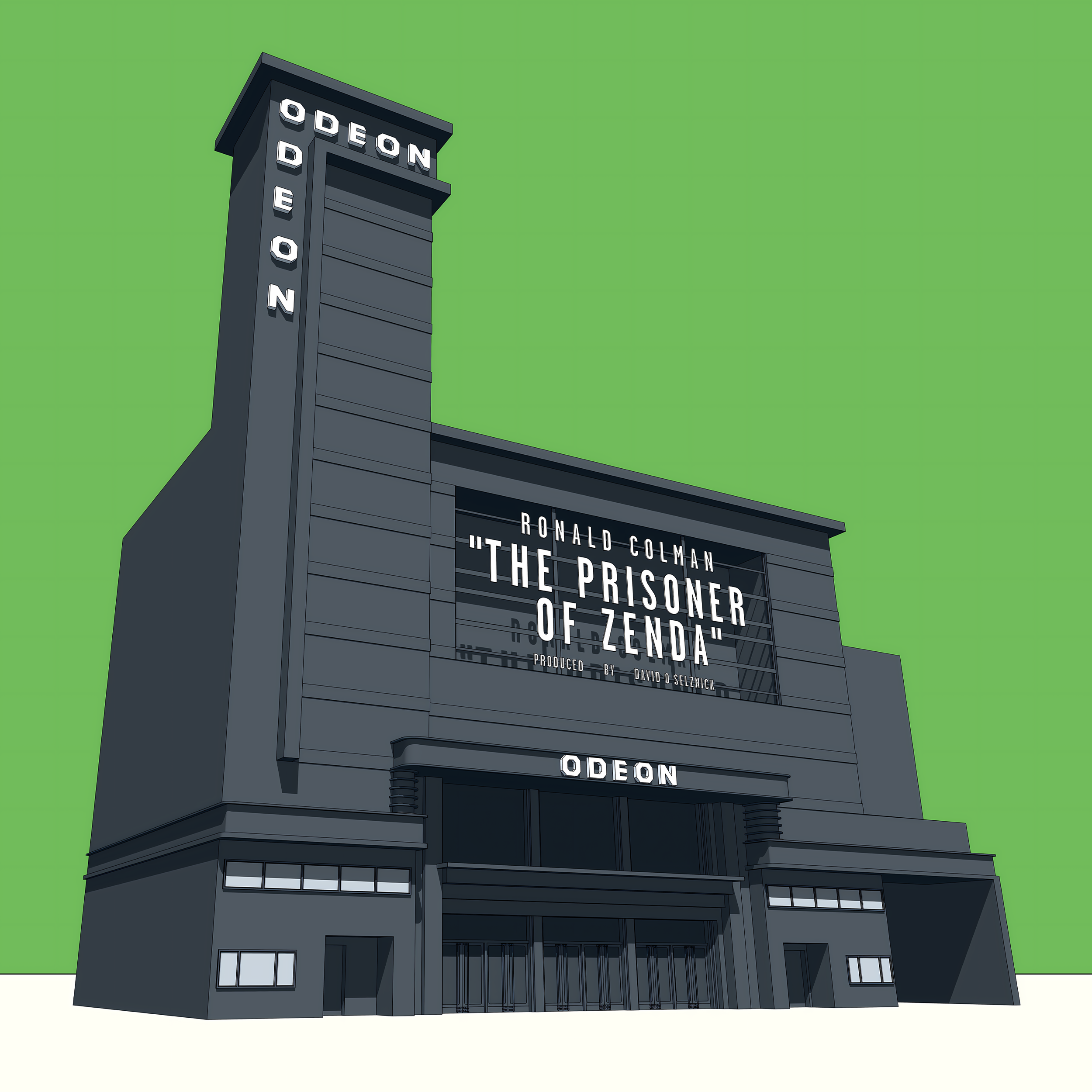
ODEON Leicester Square is the undisputed crown jewel of Oscar Deutsch’s cinema empire. On Tuesday 2 November 1937, London’s West End witnessed its opening with David O. Selznick’s The Prisoner of Zenda.
Built on the site of the demolished Victorian Alhambra Theatre, the cinema was designed by architects Harry Weedon and Andrew Mather and constructed by Sir Robert McAlpine to set a new global benchmark for picture palaces.
Departing from the typical buff faience-tiled look of suburban ODEONs, Weedon clad the massive facade and 37-metre tower in polished black granite. The granite was chosen specifically to resist central London soot while catching the reflection of surrounding neon lights.
As the flagship venue for British cinema and the home of the Royal Film Performance, the building became a victim of its own premiere status, subjected to near-continuous refits and modernizations over eight decades. This artwork transports the building back to the moment its doors opened for the very first time.
Name: ODEON Leicester Square
Architects: Harry Weedon & Andrew Mather
Opened: 2nd November 1937
First Film: The Prisoner of Zenda
Original capacity: 2,116
Architectural Style: Art Deco, Streamline Moderne
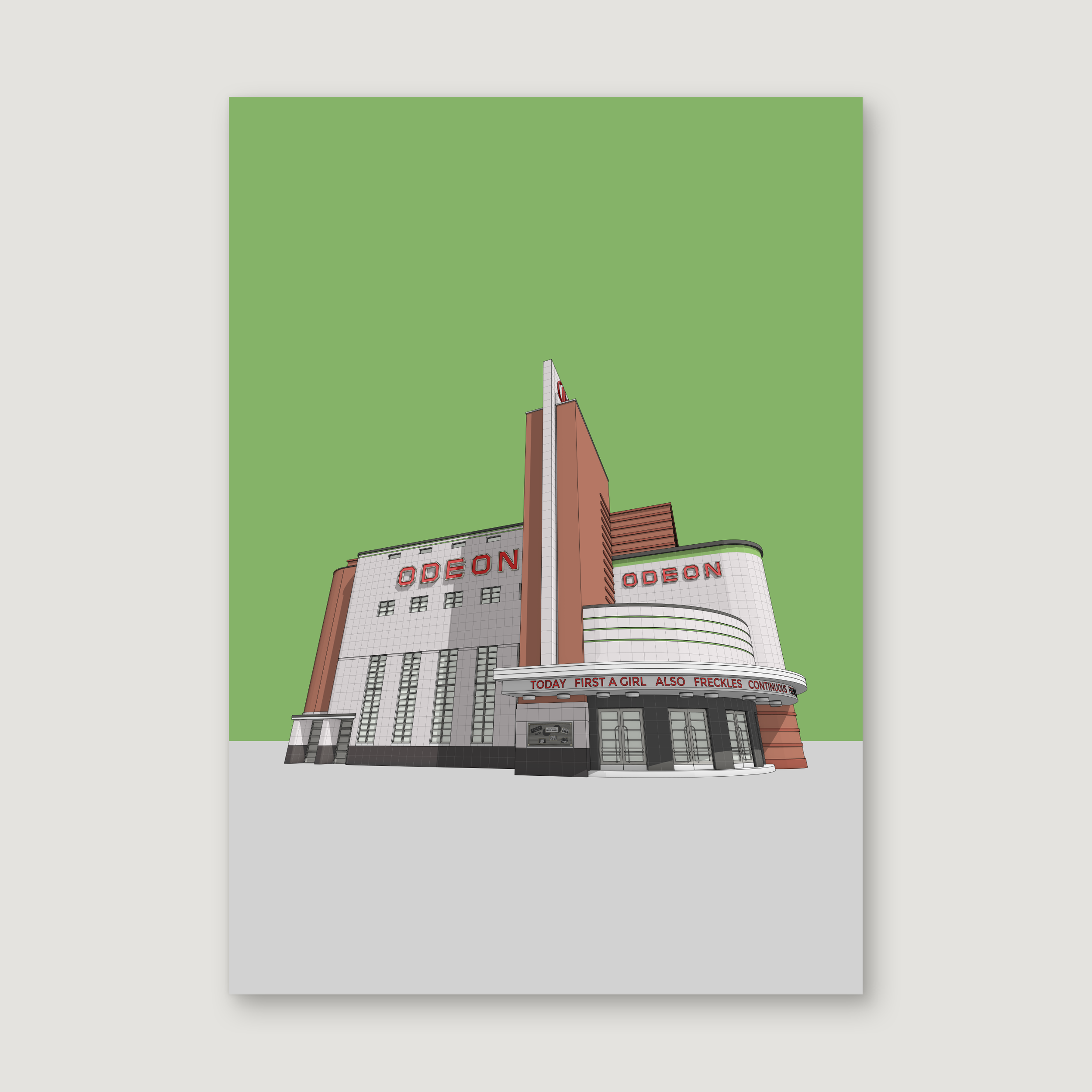
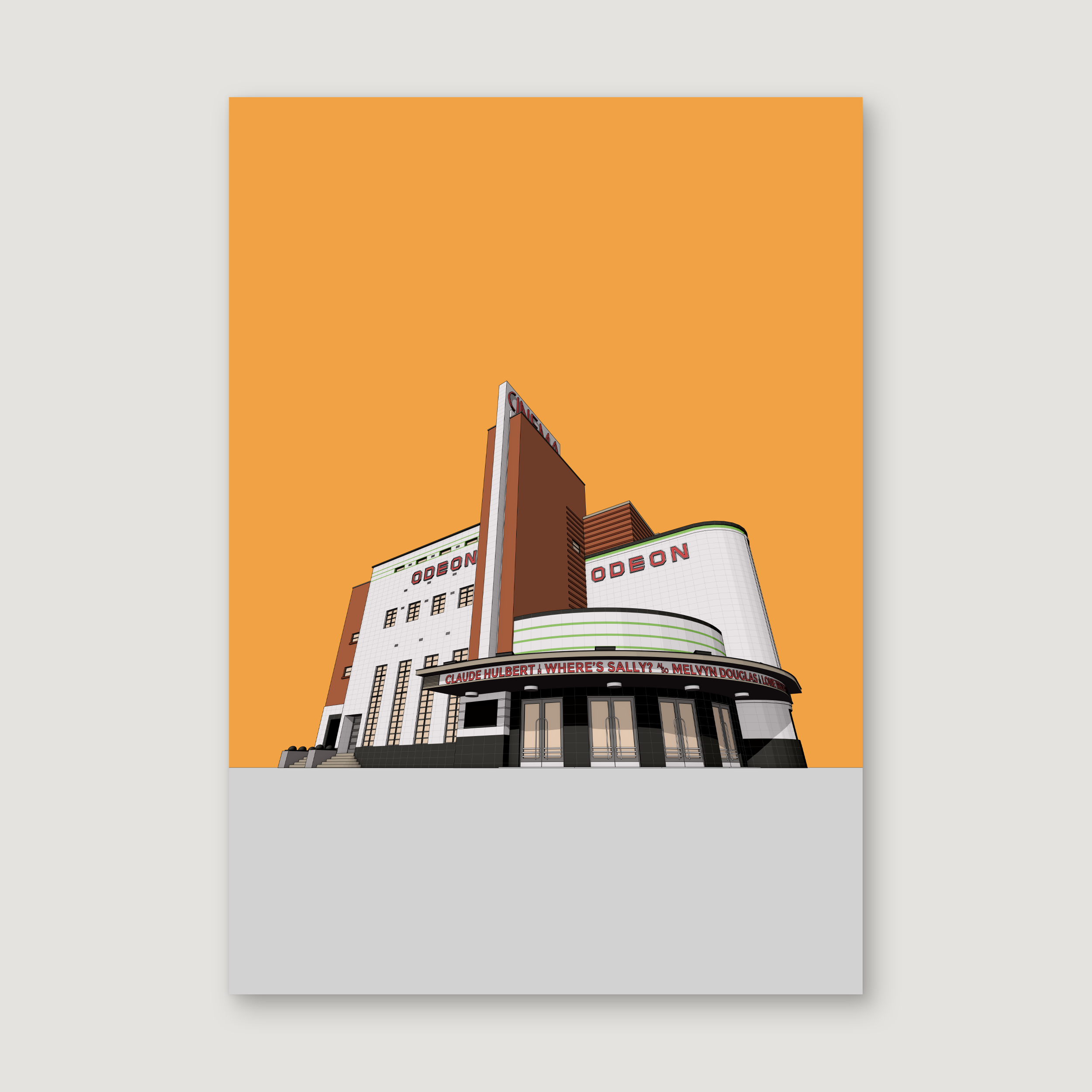
All prints are presented on Hahnemühle German etching Giclée paper. Frames are solid wood from sustainable sources, manufactured to high standards.
Sizes available:
A4 - 21×30cm, 8×12"
A3 - 30×42cm, 12×17"
A2 - 42×59cm, 17×23"
A1 - 59×84cm, 23×33"